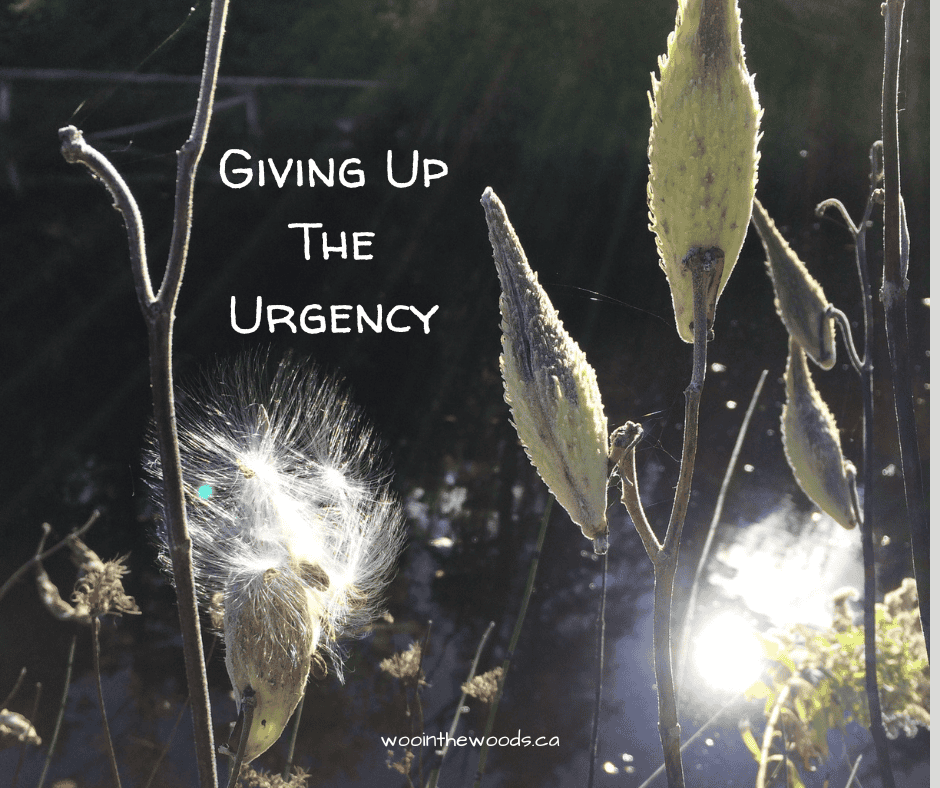
I’ve been feeling that familiar pull again — the one that shows up this time of year when the garden starts to fade and my mind starts whispering “hurry.”
Get those beds cleared. Clean up the perennials. Harvest the last of the herbs before frost. There’s this quiet pressure — as if the whole garden (and maybe the whole world) will fall apart if I don’t get it all done now.
But then I look around, and nature doesn’t seem to be in any particular rush. The trees are taking their sweet time turning colour. The bees are still making lazy loops around the asters. The sun sits a little lower each day, but it’s not panicking about the shorter hours ahead.
And that’s when I notice: the rush isn’t out there — it’s in me.
The Drumbeat of Hurry
Everywhere I turn — online, in conversations, even in my own thoughts — there’s this quiet but relentless drumbeat: hurry up.
Do more.
Buy this.
Don’t miss out.
Keep up.
We’re swimming in messages of urgency, and half the time we don’t even realize it. It’s in the emails marked “high priority” that arrive at 10 p.m., the sales that “end tonight,” the influencers promising that if we just get up at 5 a.m. and hustle harder, we too can have a life that looks perfectly curated.
It’s exhausting.
And if I’m honest, I’ve fallen for it too. I’ve hurried through meals so I could get back to work. I’ve rushed through forest walks because I felt like I should be doing something more productive. I’ve clicked “add to cart” believing that one more thing would finally make life feel organized and like I finally have my life together.
It didn’t.
Somewhere along the way, I forgot that most things in life aren’t urgent at all. I’m better at catching myself now, but it’s still a hard habit to break.
How We Got Stuck in the Rush
Urgency has become the background hum of modern life — so steady we hardly notice it anymore. Well, our bodies and nervous systems still notice it, even if our brains don’t.
It started innocently enough. Marketers discovered that urgency sells. “Limited time only.” “Act now.” “Don’t miss out.” These little triggers poke at the part of our brain that fears scarcity and loss. So we click, we buy, we scroll — we chase.
Then work life joined in. Technology made it possible to reach anyone, anytime — and we did. We blurred the lines between work time and personal time until everything became one big digital soup. Phones buzz on the dinner table. Emails ding in the middle of bedtime stories. Even vacations come with a side order of notifications.
We’ve been trained to react, to move, to produce. But in the rush to do everything faster, we forgot the question that matters most: What’s the hurry?
The Cost of Constant Urgency
When everything feels urgent, our bodies live in a low-grade state of fight-or-flight. Stress hormones keep trickling out even when nothing’s actually threatening us. We breathe shallowly. Our shoulders tense. We mistake adrenaline for energy and wonder why we crash later, foggy and irritable. Exhaustion has become a badge of honour.
It shows up in subtler ways too — the inability to sit still, the scrolling we do when we’re “relaxing,” the guilt that whispers we should be doing something else, something more.
The irony is, the more we hurry, the less we experience. The more we do, the less we absorb.
We rush through our lives trying to keep up with a pace no human body — and no human soul — was meant to sustain.
What’s Truly Urgent (and What’s Not)
When I stopped to really think about it, I realized that very little in my daily life is truly urgent.
Unless you’re a doctor, nurse, paramedic, or you urgently need to find a bathroom, most things can wait.
Dinner can be ten minutes late.
Emails can sit overnight.
The world will keep spinning if we look up from our screen for a minute to breathe.
We live under the illusion that if we pause, we’ll fall behind. But behind what? The race to nowhere? The competition to see who can be the busiest and most depleted?
Maybe “behind” is exactly where we need to be — behind the rush, behind the noise, behind the false urgency that’s been driving us for too long.
What We Gain When We Slow Down
When we stop living in urgency, remarkable things begin to happen — quietly at first.
Our breath deepens.
Our shoulders drop.
Our creativity begins to stretch as it wakes up.
Physiologically, slowing down soothes the vagus nerve — that part of our nervous system that communicates safety to every cell. When it’s calm, digestion improves, inflammation decreases, and healing begins. We sleep better. We think more clearly.
Emotionally, we rediscover joy in the ordinary. We taste our food. We notice the sunlight through the window. We laugh more, not because life got easier, but because we’re finally present enough to notice.
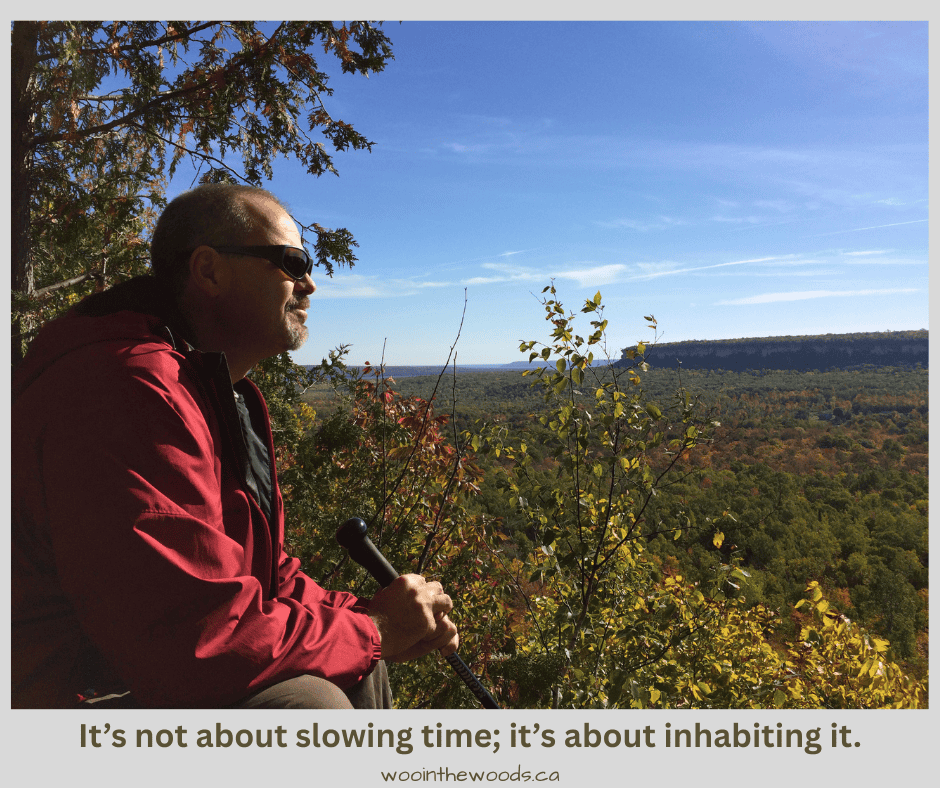
Presence, after all, is the opposite of urgency. It’s not about slowing time; it’s about inhabiting it.
Practicing Calm in Everyday Life
Giving up urgency doesn’t mean giving up ambition or passion. It means refusing to let adrenaline run your life — choosing steadiness over speed, presence over panic.
Here are a few gentle ways to begin:
- Notice it in your body. Where do you feel that subtle pressure to hurry — your chest, your jaw, your shoulders? When you notice it, pause. Take one deep, slow breath. Place a hand on your heart if you like — a small gesture that tells your nervous system, “I’m safe.”
- Say no — or not now. When your plate is too full, everything feels pressing. Saying no isn’t rejection; it’s re-direction. It’s honouring your limits and saying yes to peace.
- Ask for help. Independence is wonderful until it becomes isolation. Let someone share the load. Life isn’t meant to be a solo sprint.
- Single-task. Do one thing at a time. Notice how calm your mind feels when it isn’t juggling five tabs, literal or mental.
- Protect pockets of stillness. Morning coffee without your phone. A walk without earbuds. These moments retrain your nervous system for calm.
- Notice your language. When you catch yourself saying “I have to” or “I should,” ask: do I really? Or is this urgency talking?
- Celebrate slowness. The simmering stew, the slow-growing plant, the meandering conversation. These are nourishment for a rushed soul.
The Gentle Practice of Enough
Urgency culture thrives on one lie: that we’re never enough. Never fast enough, productive enough, successful enough.
But what if enough isn’t something we achieve? What if it’s something we choose? What if it’s something we already are?!
Every time you take a slow breath instead of rushing, you’re declaring:
This moment is enough.
I am enough.
There is no emergency here.
That’s not laziness — it’s wisdom.
Returning to Nature’s Pace
Watch nature for a while and you’ll see it clearly. Trees don’t rush to grow. They stretch toward the sun at their own steady pace. Seasons don’t panic about being late. Even birds pause to rest between flights.
Maybe we’re meant to do the same.
We can still work, still create, still grow — but from a grounded place that honours our rhythm instead of fighting it. You don’t need to earn your rest or prove your worth by rushing. You already belong here, exactly as you are, moving at the pace of your own breath.

A Closing Breath
If I could wrap this whole reflection into one simple takeaway, it would be this:
Most of life is not something to be rushed.
The emails can wait. The dishes can wait. The world won’t crumble if you take five minutes to breathe, to sit, to simply be.
Giving up urgency isn’t about doing less — it’s about living more. It’s about reclaiming your right to move through life at a human pace, not a digital one.
So today, wherever you are, take a moment.
Place your hand on your heart.
Breathe in gently.
Breathe out slowly.
You have time.
You are enough.
There is no rush.
Author’s Note:
If this message resonated, I’d love to hear from you. How are you reclaiming calm in your own life? What helps you slow down? Leave a comment or share this post with someone who could use a deep breath today.
Recent Posts
By the time you’re reading this, January is well underway - almost done actually. The confetti has been swept up, the bold declarations have softened (or been forgotten), and whatever energy the...
DisclaimerI’m not a doctor, a psychologist, or a psychiatrist - just a curious explorer of this human experience. This post is simply my mind wandering and wondering, trying to figure things out....