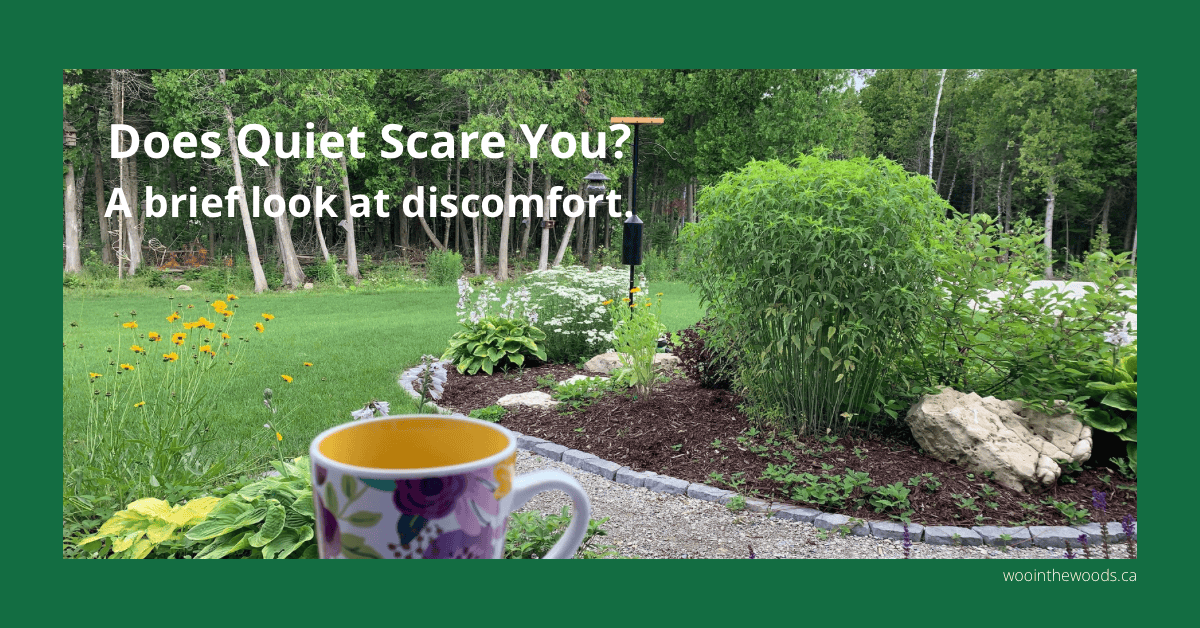
A couple of weeks ago, over on my other blog, I wrote a post about adjusting to life in the woods. In it, I talked mostly about the practical side of rural living – things like stocking the pantry and freezer for inevitable winter road closures (they can close for days at a time), and how “what’s for dinner?” suddenly feels like a much bigger question when the nearest takeout is a 30-minute round trip on a good day.
Another thing I mentioned was the isolation – and that contrary to popular belief, it’s rarely quiet here in the woods. Peaceful? Yes. Serene? Often. Quiet? Not so much. Between the birds, frogs, wind, and occasional squirrel crashing through the forest like an elephant, there’s always a soundtrack.
But today, I want to explore that last bit a little deeper, because my other blog isn’t really where I get into the deep, soul-searching stuff I sometimes find myself pondering.
After years of city life – my whole life really, except for brief stints of farm living, camping trips, and the occasional hike – I was more than ready for rural life. I craved the space, the softness of green all around me, the solitude. What I didn’t realize was how badly my nervous system needed it. Only now, after two and a half years of living here, do I recognize the signs of healing.
How do I know my nervous system is feeling better? Because I can sit. Just … sit. Without getting antsy. Without needing the TV on or music filling every corner. Without reaching for my phone every thirty seconds like it’s a lifeline instead of the attention-draining device it actually is.
When we venture back to the city for a weekend, I feel the difference acutely. My nervous tension ramps back up almost immediately, even when I’m having a good time. There’s a low hum under my skin that tells me I need to get back to the woods – back to where the noise is natural and the quiet doesn’t demand anything from me.
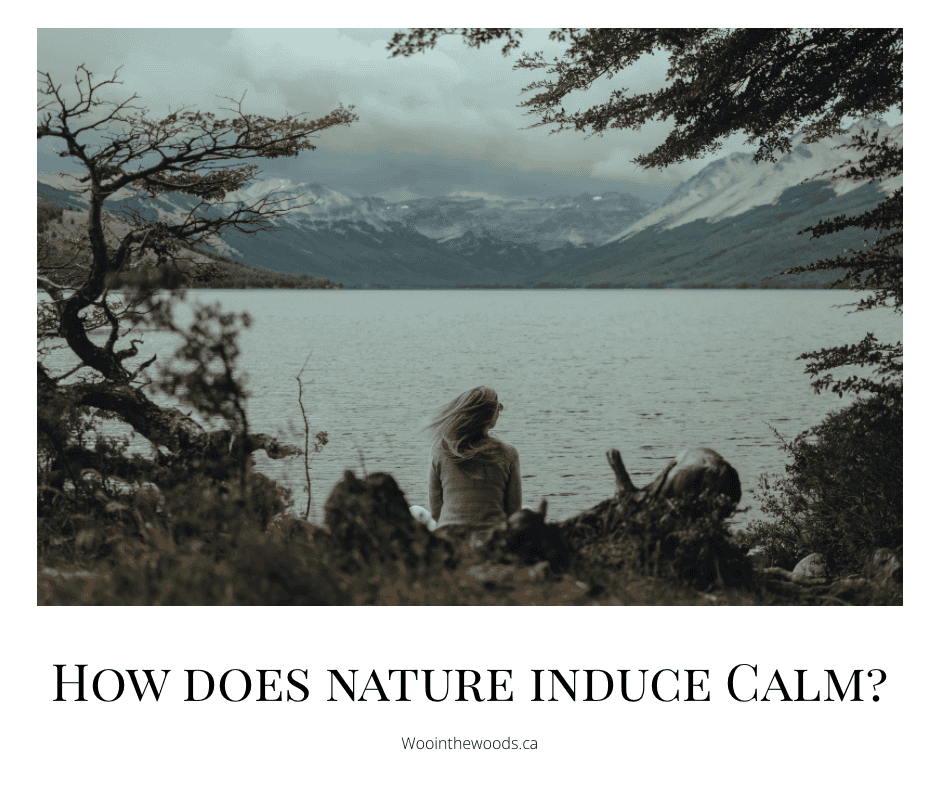
Why Does Nature Calm Us?
Here’s where I could drop a science paragraph, and I will, but I promise not to make it too clinical. There’s actually a term for the healing power of nature: forest bathing, or shinrin-yoku, as the Japanese call it. Studies have shown that spending time in nature lowers cortisol (the stress hormone), reduces blood pressure, and can even improve immune system function. Something about breathing in those phytoncides – the essential oils released by trees – and immersing ourselves in the natural world seems to tell our bodies, “You’re safe. You can stop bracing for impact.”
Which makes me wonder … why are so many of us bracing all the time?
But What If You’re Not a Forest Person?
Now, maybe you’re reading this thinking, “That’s lovely, but I’m more of a city person. I like people. I need the bustle. I like being busy. The forest sounds a bit too … eerie.”
Fair enough.
Not everyone wants to live in a cabin in the woods (although for the record, I don’t live in a cabin, and I’ve yet to see a single troll). But what interests me most isn’t just the question of whether you like the woods, it’s whether the idea of quiet unsettles you.
I see it in the people who visit us. At first, they’re enchanted. They comment on the peacefulness, the fresh air, the lack of traffic noise. But after a day or two, many start to get restless. They glance around like the trees might close in. They laugh a little too loudly. They ask if there’s somewhere nearby to grab a coffee (there’s not). They reach for their phones like an addict looking for the next Insta-hit.
And eventually, someone will say it: “It’s so quiet.”
They say it like it’s a compliment, but I sense the underlying discomfort. I sense it because I’ve felt it myself when we first got here.
What If We’re Afraid of the Quiet?
It makes me wonder: Does quiet scare us? Maybe the words scare and afraid aren’t quite right but you know where I’m going…
Is it the absence of noise – or the presence of our own thoughts – that unsettles us most?
I’ve started to believe that many people are afraid of what they’ll discover in the silence. Not in a conscious, deliberate way. But deep down, when all the distractions are stripped away, and the only soundtrack is the birds, the rustle of leaves or the creak of a tree branch, you’re left with … yourself.
No podcasts, no social media feed, no news updates. Just you.
And for a lot of people, I sense, that’s terrifying.
Are We Avoiding Ourselves?
Think about how much effort we put into not being alone with our thoughts. We listen to podcasts while walking the dog, blast music while cleaning, and binge Netflix while scrolling our phones. Multitasking, you say? More like multi-distracting.
Is it possible that much of our modern noise addiction isn’t about entertainment, but avoidance? Are we filling every spare moment because we’re afraid of the questions that might arise in the silence?
Questions like:
- Am I actually happy in this life I’ve built?
- What do I really want?
- Why do I feel so restless, even when everything looks fine from the outside?
- Who am I without the busy?
Those aren’t questions you can answer while scrolling TikTok.
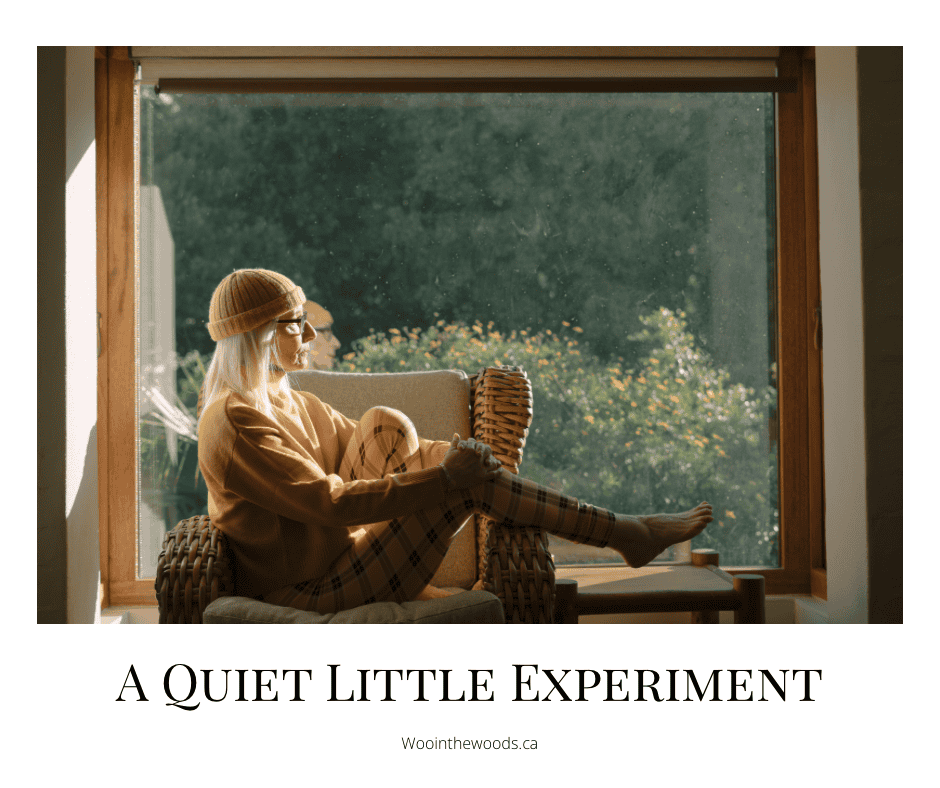
A Little Quiet Experiment
Here’s a little experiment I did recently: I sat on my porch, in the late afternoon, and timed myself to see how long I could just sit. No book, no phone, no music. Just me, the birds, and whatever thoughts showed up.
Day one? I lasted seven minutes before I had the overwhelming urge to get up and pull a weed.
Day two? Fifteen minutes, but only because I started narrating my observations like David Attenborough in my head.
By day five? I could sit for over half an hour without feeling like I needed to do anything. And somewhere in that stillness, I noticed I was breathing more deeply. My shoulders weren’t up around my ears anymore. And – surprise! – some of the big life questions I’d been dodging started to feel less threatening.
Turns out, when you stop running, the monster in the woods is just … you. And you’re not nearly as scary as you think.
Why Are We So Afraid to Go Inward?
There’s a theory in psychology that people avoid introspection because it can lead to uncomfortable realizations – and change. Change, as we know, is hard. It disrupts the status quo. It requires effort, uncertainty, and sometimes loss.
Staying distracted is safer. Or so we believe.
But what if the discomfort of quiet isn’t a sign to avoid it – but an invitation to explore it?
Finding Your Kind of Quiet
Now, before you assume I’m suggesting you move to the forest, build a tiny house, and live off mushrooms (tempting though that sometimes sounds), let me clarify: Quiet doesn’t have to mean isolation in the woods.
Quiet can look like:
- A morning walk without your headphones.
- Five minutes of deep breathing before you check your phone in the morning.
- Sitting in your backyard and watching the clouds instead of doomscrolling.
- Turning off the car radio and just driving in silence for a few minutes.
Quiet is less about the absence of noise and more about the absence of distraction. It’s about creating space – not just in your schedule, but in your mind.
What You Might Find
In that space, you might find:
- A truth you’ve been avoiding.
- A dream you forgot you had.
- The realization that you’re more tired than you let yourself admit.
- The spark of an idea.
- Or maybe … peace.
Not dramatic, earth-shattering peace. But the quiet, gentle kind that slips in when you’re not looking for it. The kind that reminds you: you’re okay. You’re enough. You’re allowed to rest.
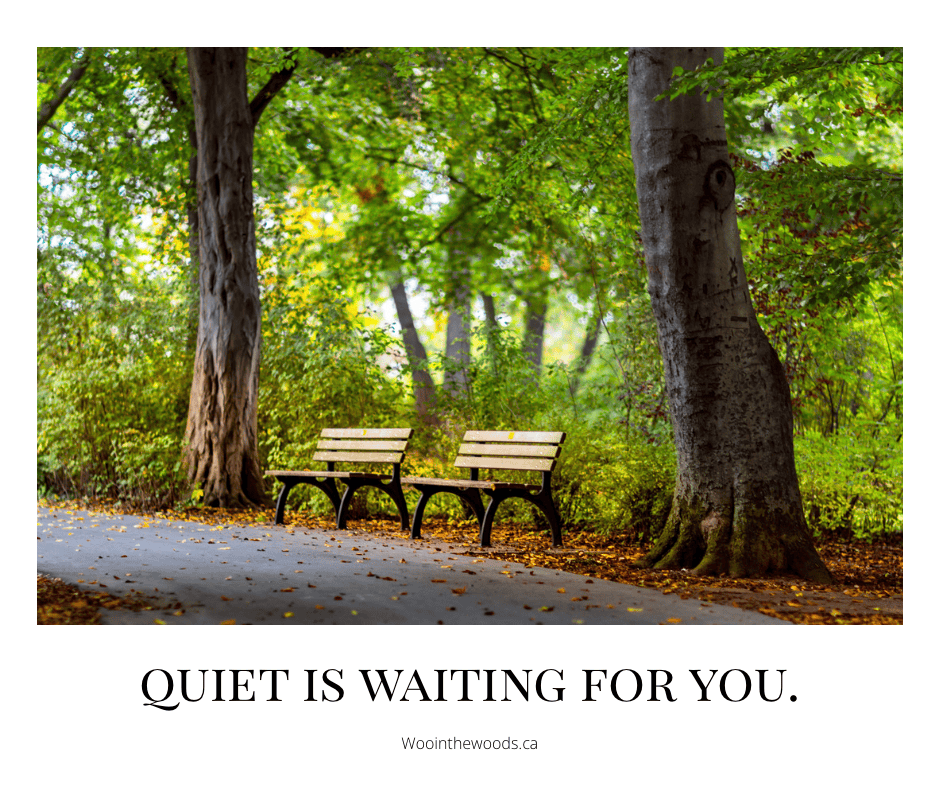
Does Quiet Scare You?
So I’ll ask again: Does quiet scare you?
If so, you’re not alone. But maybe, just maybe, that’s all the more reason to seek it out.
Start small. Let yourself be a little uncomfortable. Notice when you reach for a distraction, and ask yourself why.
You might discover that silence isn’t something to fear, but a doorway to walk through.
And on the other side? Just you. But that might be exactly who you’ve been looking for.
Now if you’ll excuse me, I’m off to sit on my porch, listen to the birds, and avoid watering the plants for a while longer.
Recent Posts
By the time you’re reading this, January is well underway - almost done actually. The confetti has been swept up, the bold declarations have softened (or been forgotten), and whatever energy the...
DisclaimerI’m not a doctor, a psychologist, or a psychiatrist - just a curious explorer of this human experience. This post is simply my mind wandering and wondering, trying to figure things out....